Why People Save Voicemails from Loved Ones
Voicemails from parents and grandparents become precious after they're gone. Learn why people save them, the science of voice memory, and how to preserve these irreplaceable recordings.
Trevor Richardson

Trevor Richardson is the founder of InkTree.ai, a family storytelling platform that helps families record stories by phone, create transcripts, and preserve memories in a private archive that can be shared across generations. After losing his father, he became focused on preventing the quiet loss of voices and everyday stories that disappear over time. With close to two decades in cybersecurity, Trevor brings a privacy first approach to protecting deeply personal family history. He writes about family storytelling, digital legacy, and using voice technology to strengthen connection across generations.
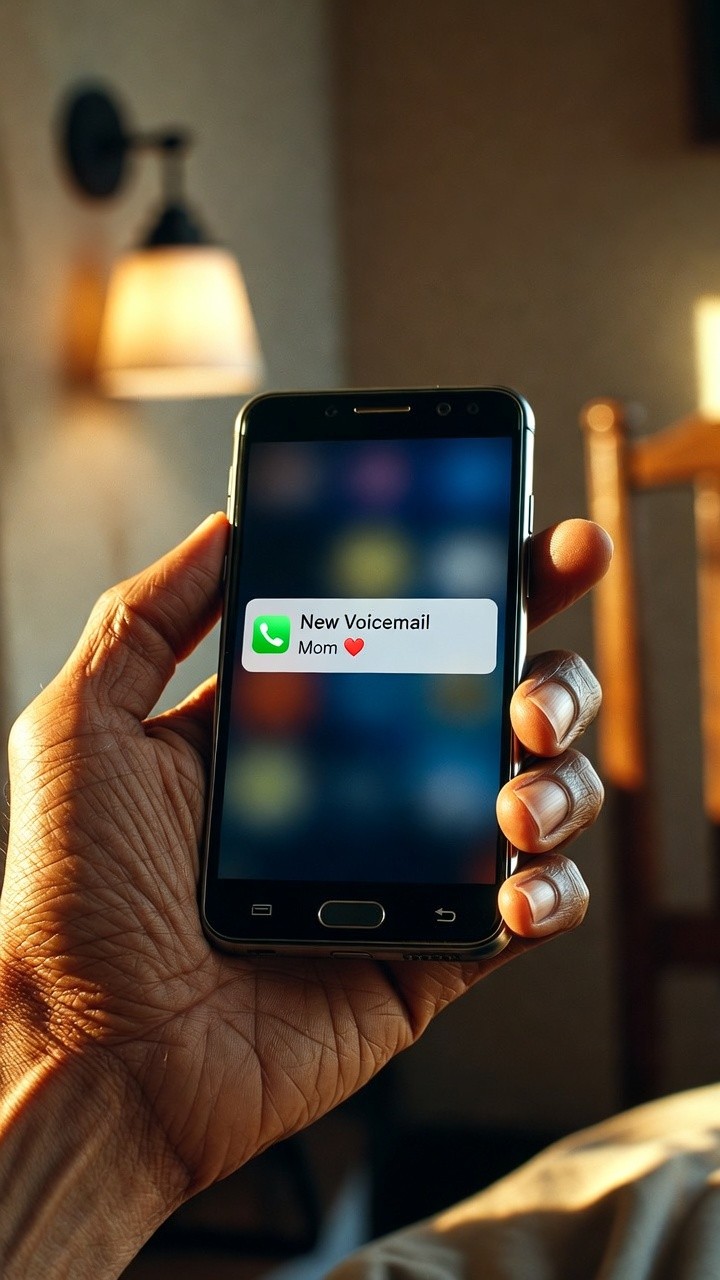
There's a voicemail on your phone you can't delete.
Maybe it's your mom saying "Just checking in, honey." Maybe it's your dad's voice wishing you happy birthday. Maybe it's your grandmother humming while she talks, the way she always did.
You've listened to it dozens of times. You're terrified of losing it.
You're not alone. Millions of people cling to voicemails from loved ones, especially after they're gone. A 2019 study by the Pew Research Center found that 72% of adults keep digital content for sentimental reasons—and voicemails rank among the most treasured.
The Science of Voice Memory: Why Voices Fade First
Here's something researchers have discovered that explains why these voicemails feel so precious: we lose the memory of someone's voice faster than we lose their face.
Dr. Kathleen McDermott, a cognitive psychologist at Washington University, explains that auditory memories are stored differently than visual ones. While we can look at a photo and instantly recall a face, voice memories require active neural reconstruction. Without regular exposure, the brain's representation of a loved one's voice degrades within months.
This is why grieving people often describe the panic of realizing they can't remember what their parent sounded like. A photograph brings back their face, but nothing brings back their voice—except a recording.
A 30-second voicemail isn't just a message. It's the only way to hear them laugh again. The only way to remember exactly how they said your name.
Why Voicemails Feel Irreplaceable
A voicemail captures something photos never can: the actual sound of someone's voice. The way they laughed. Their accent. The pause before they said "I love you."
When someone passes away, their voice is often the first thing we forget. We can look at photos, but we can't hear them anymore. That's why a simple 30-second voicemail can feel like the most valuable thing you own.
People describe their saved voicemails in the same terms they'd use for priceless heirlooms:
"It's the only recording I have of my dad's voice"
"I play it when I need to feel close to her"
"My kids never met their grandfather, but now they can hear him"
These voicemails become emotional anchors—tangible proof that this person existed, that they loved you, that their voice once filled your life.
Real Stories of Lost Voicemails
The grief of losing a voicemail hits differently than other losses. It feels preventable. People share these stories in online grief forums every day:
Sarah, 34, from Chicago: "My mom's voicemail was on my old iPhone. When I upgraded, the store transferred everything except voicemails. I didn't know until weeks later. I would give anything to hear her say my name again."
Michael, 52, from Seattle: "T-Mobile sent an email saying old voicemails would be deleted if I didn't back them up. I meant to do it. I forgot. My father's last voicemail is gone."
Jennifer, 41, from Austin: "My grandmother left me a voicemail on my birthday. I saved it for six years. Then my phone went through the washing machine. I cried for three days."
These stories aren't rare. They're happening constantly, silently, to people who assumed their carrier or phone would protect something irreplaceable.
The Fear of Losing Them
Here's what keeps people up at night about their saved voicemails:
Phone upgrades that wipe voicemail storage - Many carriers don't transfer voicemails during upgrades
Accidentally deleting messages - One wrong swipe and it's gone forever
Carrier systems that auto-delete old voicemails - Most carriers delete voicemails after 14-40 days
Phones that break or get lost - And take the voicemails with them
Changing carriers - Voicemails don't transfer between providers
Many people have lost treasured voicemails this way. The grief hits twice—once when they lost the person, and again when they lost the voice.
How to Preserve Voicemails (iPhone and Android)
If you have voicemails you want to keep forever, don't wait. Here's exactly how to back them up:
On iPhone:
Open the Phone app and tap Voicemail
Select the voicemail you want to save
Tap the share button (square with arrow)
Choose "Save to Files" or "Save to Voice Memos"
Sync to iCloud or email it to yourself
On Android:
Open your Phone app and go to Voicemail
Long-press on the voicemail
Look for "Save" or "Share" options
Save to Google Drive or your device's storage
Email a copy to yourself as backup
Additional preservation steps:
Save files in multiple places—cloud storage, hard drive, and a USB drive
Convert to MP3 or WAV formats for maximum compatibility
Share copies with family members so no single point of failure exists
Consider burning to a CD for long-term archival storage
The key principle: redundancy. If a voicemail only exists in one place, it's one accident away from being lost forever.
What Makes Voice Recordings So Powerful
Neuroscience research helps explain why voice recordings affect us so deeply. A study published in the journal Cerebral Cortex found that hearing a loved one's voice activates the same emotional centers in the brain as physical touch. The voice carries emotional information that text and photos simply cannot convey.
There's also the phenomenon of "acoustic memory"—the brain's ability to store and recognize voices. Unlike visual memories, which we can refresh with photographs, acoustic memories require active exposure to maintain. When we stop hearing someone's voice regularly, our brain's representation of that voice begins to degrade.
This is why people who lose a parent often say the voice is what they miss most. It's not melodrama—it's neuroscience. The voice is processed in parts of the brain connected to emotion, identity, and attachment. Losing access to that voice creates a genuine neurological gap.
Beyond Voicemails: Recording More While You Can
Here's the truth about saved voicemails: they're precious, but they're also accidents of fortune. A random Tuesday when your mom happened to call and leave a message. A birthday greeting you happened not to delete.
If your parents or grandparents are still here, you have something others would give anything for: the chance to record more of their voice intentionally.
Not just brief voicemails—their stories. Their memories. The sound of them telling you about their first job, their wedding day, how they met, or the day you were born.
The questions you've always meant to ask. The stories you've always wanted to hear. The wisdom they've accumulated over a lifetime.
Think about what you'd want to hear if you had more than just a voicemail:
The full story behind their wedding photo
What they were really thinking when they held you for the first time
Their advice for the challenges you're facing now
Their voice, unhurried, telling you stories for as long as they want
These conversations don't require fancy equipment. You can record your parents' voice with just a phone call.
Start Recording Before It's Too Late
The people who save voicemails understand something important: voices are precious. Irreplaceable. Finite.
If you're reading this and your loved ones are still here, you have an opportunity. Not to save one more voicemail—but to capture hours of their voice. Their stories. Their laughter.
InkTree makes this simple. A phone call. A conversation. Their voice, preserved forever. No apps to download. No complicated setup. Just call and talk.
Because someday, you'll wish you had more than just a voicemail.
Gift your parents a recorded memory session →